
How to Write a Cover Letter for Remote Job Success


On this page
The most popular advice about a cover letter for a remote job is also some of the least reliable: skip it when the posting says “optional.” That approach assumes every employer ignores written applications. Remote hiring makes that assumption especially risky because your writing may be one of the clearest early signals of how you document decisions, explain problems, and keep work moving without a shared office.
A cover letter won’t rescue an application that lacks the required experience. It can, however, remove uncertainty that a résumé leaves behind. A strong letter connects your evidence to the role, clarifies where you can work, and shows how you operate across distance, time zones, and asynchronous workflows. You can also compare current opportunities through remote job listings on JobGlance while applying the same eligibility checks described below.
Why Remote Cover Letters Actually Matter
A survey of 625 hiring managers reported that 83% read most cover letters, while 45% read the cover letter before the résumé. The same survey found that 49% believed a strong cover letter could secure an interview for a candidate whose application was otherwise uncertain. Those figures come from the cover letter statistics survey, and they challenge the idea that an optional document has no value.
The evidence isn’t uniform. Another survey cited in the available results found that 44% of business leaders never read cover letters, so no applicant should treat a letter as universally required. The practical conclusion is narrower and more useful: you usually can’t know in advance which hiring team will use the letter as a differentiator. A concise, specific letter gives you protection against that uncertainty, especially when it supplies information the résumé can’t show.
The written-work test
Remote employers often need to assess more than technical competence. They need confidence that you can turn an ambiguous request into a clear update, record a decision, flag a blocker, and keep colleagues informed without constant meetings. A cover letter is a small sample of those habits.
Compare these two openings:
“I’m excited to work remotely and believe I’m a great team player.”
“I’m applying for the product operations role because your posting emphasizes launch coordination and written stakeholder updates. In my last role, I maintained decision logs, clarified handoffs, and kept distributed contributors aligned through documented status updates.”
The first sentence expresses preference. The second demonstrates operating behavior. Remote enthusiasm is easy to claim, while asynchronous communication, ownership, and documentation require evidence.
Answer the concerns behind the application
Hiring managers may wonder whether a remote candidate can work independently, overlap with the team, and onboard without excessive back-and-forth. Your letter should address those concerns indirectly through proof:
- Show independence: Describe a project you owned from definition through delivery.
- Show written clarity: Mention decision records, release notes, customer summaries, or structured progress updates.
- Show distributed collaboration: Explain how you coordinated handoffs or resolved dependencies across locations.
- Show eligibility: State your location, time zone, overlap, and work authorization when relevant and accurate.
The letter becomes a compact business case. It doesn’t repeat your career chronology. It explains why your way of working fits this particular distributed team.
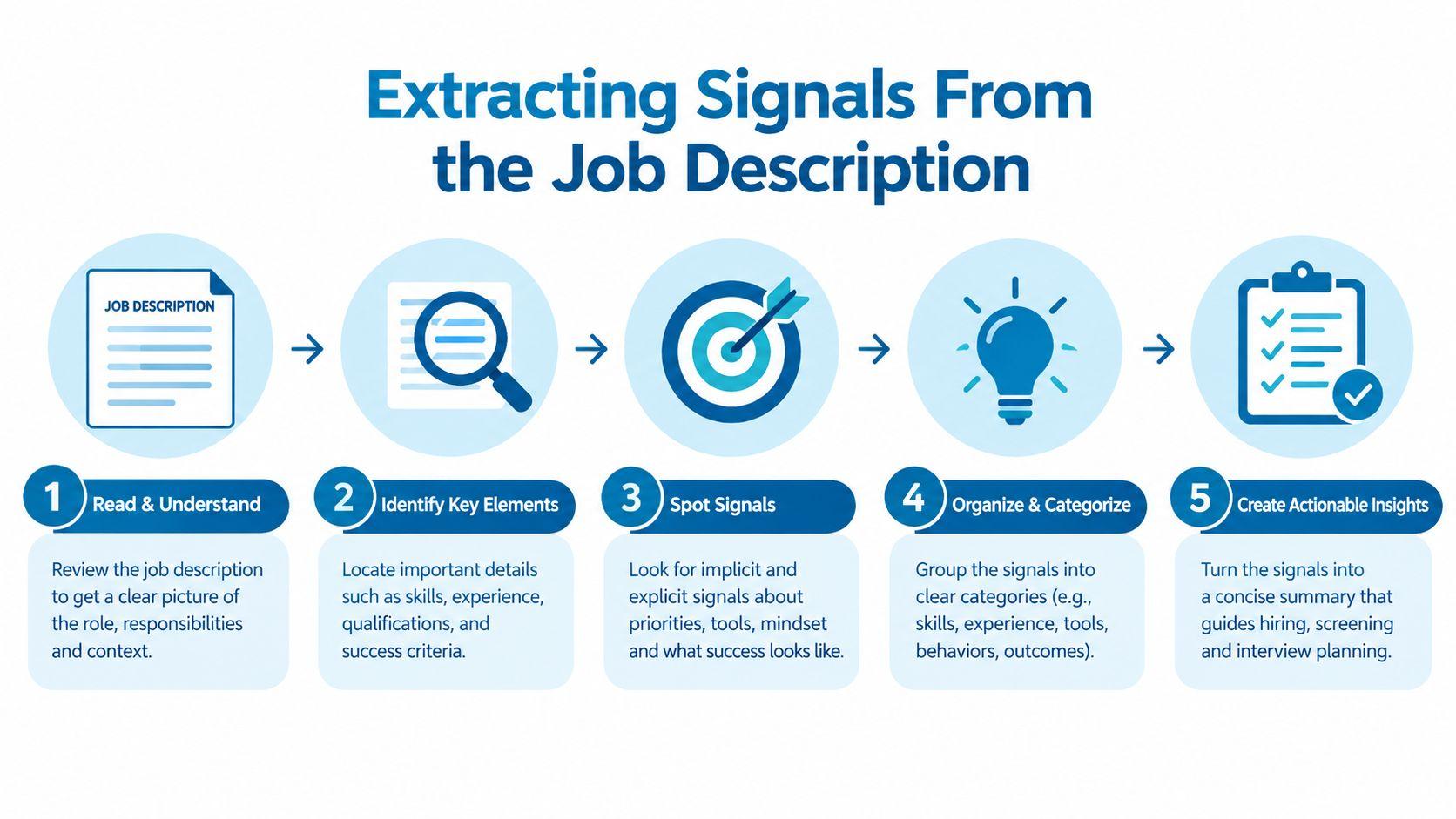
Extracting Signals From the Job Description
A customized letter performs better than a generic one because it answers the employer’s actual question, not the candidate’s preferred question. A field experiment covering 7,287 real applications reported callback rates of 16.4% for tailored letters, compared with 12.5% for generic letters and 10.7% when no cover letter was submitted. The figures are reported in this summary of the application field experiment.
Don’t interpret that result as a promise of an interview. Use it as a drafting principle. Relevance beats volume, and replacing only the company name doesn’t create relevance.
Build a requirement-to-evidence matrix
Before drafting, create three columns:
| Job description signal | Résumé-backed evidence | Remote relevance |
|---|---|---|
| “Own product launches” | Led a release or rollout | Managed dependencies and documented decisions |
| “Cross-functional collaboration” | Coordinated several teams | Used written handoffs and clear escalation |
| “Work independently” | Delivered a project with limited supervision | Set milestones, shared updates, and resolved blockers |
Start with the top three to five requirements, not every keyword in the posting. For each one, copy the employer’s wording accurately, select one proof point from your résumé, and identify the result or behavior it demonstrates. If you can’t support a requirement with experience, don’t pretend you can. Choose a related transferable example or leave it out.
Then identify the role’s operational challenges. A product manager listing might mention prioritization, stakeholder alignment, customer discovery, and written specifications. Those terms reveal what the team needs solved. A credible letter could connect a documented prioritization process to a product decision, then explain how written rationale helped distributed stakeholders act without waiting for another meeting. If you’re exploring comparable opportunities, product manager roles on JobGlance can provide additional job-description language to analyze.
Use company language without stuffing
Mirror terminology naturally when it accurately describes your experience. If the posting says “async collaboration,” use that phrase once while describing a real workflow. If it refers to a product, customer segment, or operating model, name it in the opening or evidence paragraph and explain why your background is relevant.
Avoid creating a keyword inventory disguised as prose. Recruiters notice letters that mention every tool but explain none of the outcomes. A hiring manager needs to see what you did, how you worked, and what changed, not a copied list of platform names.
Structuring Your Pitch for Distributed Teams
A strong remote letter is short enough to scan and specific enough to trust. One survey summary reports that 80% of hiring managers believe a cover letter should add to, not duplicate, the résumé, while 66% of employers prefer a letter that is half a page or less. The supporting cover letter statistics summary reinforces a practical constraint: write for a busy reader who wants evidence quickly.
A useful structure has four compact parts. Each paragraph should perform a different job.
Paragraph one connects you to the need
Open with the exact role and a relevant contribution. Don’t lead with a broad statement about loving flexibility or working from home. Lead with the employer’s problem and your evidence.
For example:
“I’m applying for the Customer Success Manager role at Northstar because your posting emphasizes proactive onboarding and clear communication with product teams. In my previous role, I owned onboarding workflows for distributed customers, converted recurring questions into documentation, and used structured updates to keep internal stakeholders aligned.”
This opening establishes role fit, company relevance, and remote-compatible behavior without overexplaining.
Paragraph two proves an outcome
Choose one achievement that maps directly to the posting. State the context, your action, and the result. If your résumé says you improved a process, the letter should explain how you achieved that improvement in a distributed environment.
A strong example might describe replacing scattered status messages with a shared project record, defining ownership for each handoff, and giving stakeholders a predictable written update. The point isn’t to claim that remote work made the result possible. The point is to show that you use systems that reduce ambiguity when colleagues aren’t sitting nearby.
Keep the evidence verifiable. If your résumé contains a measurable result, use it consistently. If it doesn’t, describe a concrete deliverable such as a playbook, dashboard, release note, escalation guide, or decision log.
Paragraph three demonstrates remote operations
This paragraph should answer, “What will it be like to work with you?” Mention the behaviors that reduce friction:
- Asynchronous updates: You summarize progress, next steps, and blockers.
- Documentation: You record decisions and turn repeated questions into reusable guidance.
- Self-management: You set priorities, manage dependencies, and raise risks early.
- Time-zone coordination: You plan handoffs and make necessary context available to colleagues later.
Don’t list these as personality traits. Attach them to a real example. “I’m self-motivated” is weak. “I set written milestones, shared risks before deadlines, and maintained a decision log while coordinating contributors in different time zones” gives the reader something to evaluate.
Paragraph four closes with a clear next step
Reaffirm the specific contribution you want to discuss, then invite a conversation. Keep the sign-off professional and consistent with the rest of your tone. If you’re unsure how to finish an application email or letter naturally, this guide to the best way to close an email offers useful context on choosing a sign-off that fits the message.
A remote letter doesn’t need a dramatic ending. “I’d welcome the opportunity to discuss how my experience with documented workflows and cross-functional delivery could support your launch team” is more effective than another paragraph about passion.
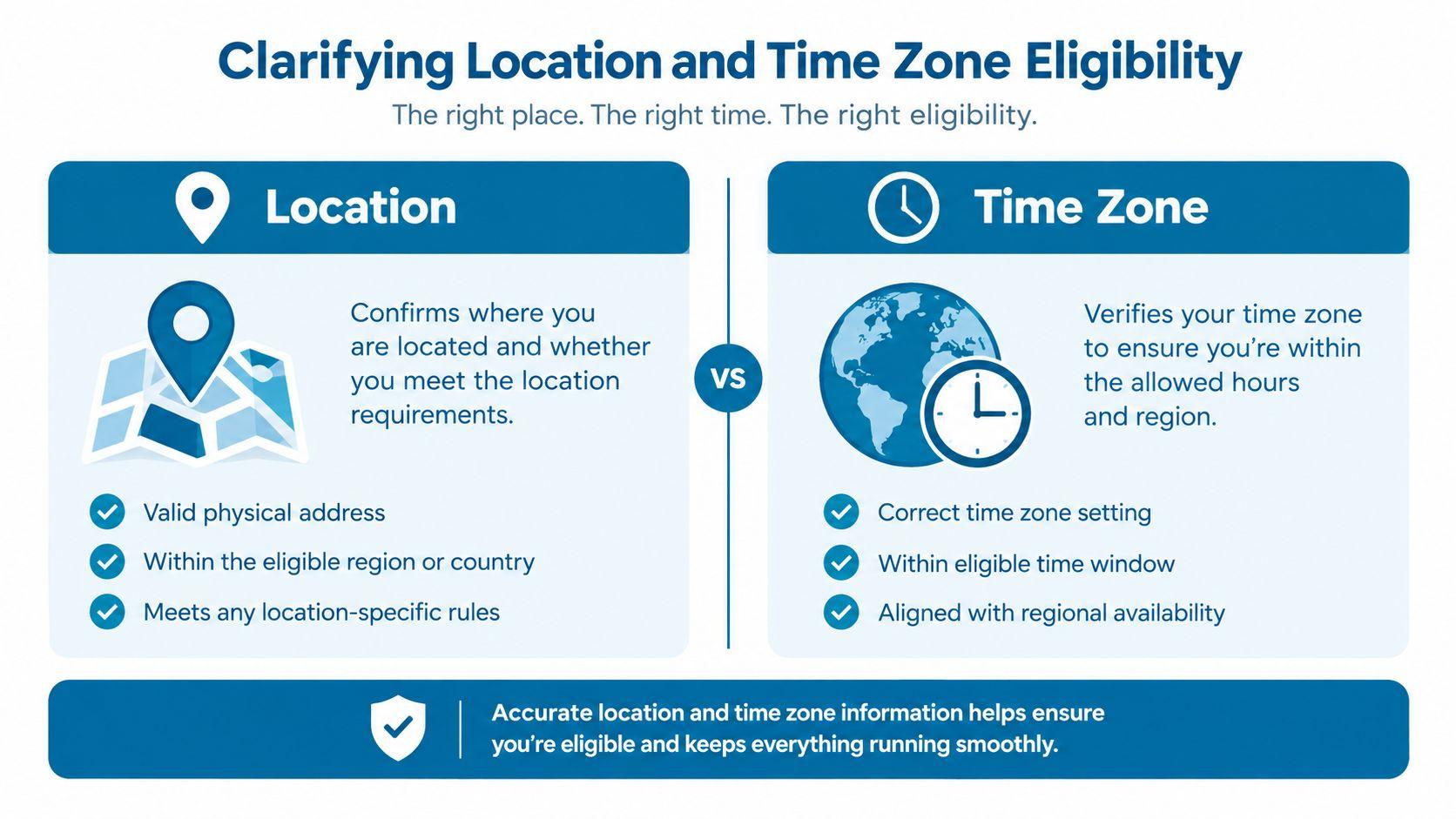
Clarifying Location and Time Zone Eligibility
“Remote” doesn’t automatically mean “from anywhere.” Recent listing data shows that fewer than 4% of remote jobs are location-agnostic, about 85% are restricted to a specific country, and another 11% include time-zone or regional limits. Those figures are reported in Jobgether’s remote job market analysis.
Geography can determine eligibility before a recruiter evaluates your experience. Employers may be limited by payroll, tax, employment-law, data-security, travel, or occasional onsite requirements. A letter that leaves your location unclear forces the recruiter to investigate or assume that you aren’t eligible.
State the facts recruiters need
Put the relevant logistics near the opening or in a short middle paragraph. Include only information that is accurate:
- Current location: “I’m based in Portugal.”
- Time zone: “I work in Western European Time.”
- Overlap: “I’m available for the team’s required afternoon overlap.”
- Work authorization: “I’m authorized to work in Germany without sponsorship.”
- Travel: “I can accommodate occasional travel to the company’s stated office location.”
Don’t imply worldwide eligibility because the role uses the word remote. A candidate living in one country may be eligible for domestic remote employment but not cross-border employment. The distinction matters more than a statement that your home office is fully equipped.
Use situation-specific wording
For domestic remote work, write:
“I’m based in the United States and available to work within the team’s required Eastern Time hours.”
For cross-border contractor work, write:
“I’m based in Mexico, available for the listed Central Time overlap, and open to the contractor arrangement described in the posting.”
For a sponsorship scenario, be direct:
“I’m currently based in France and would require employer sponsorship to work in the United Kingdom. I’m available for the role’s stated working hours.”
Don’t promise that sponsorship is available, and don’t hide a requirement behind vague language. If the posting doesn’t clarify its policy, state your situation plainly and let the employer assess it. Candidates comparing genuinely global opportunities can use worldwide remote jobs on JobGlance as a starting point, but each individual listing still needs an eligibility check.
Navigating ATS Filters and AI Drafting Tools
A polished letter can fail before a person reads it if the file is difficult to parse. Use a single-column layout, standard headings, ordinary fonts, and a text-searchable export. Avoid tables, graphics, text boxes, decorative headers, and unusual symbols in the document itself. Follow the employer’s requested file type rather than assuming PDF is always preferred.
Formatting is only half the problem. The other half is producing a letter that sounds specific when AI has helped create it. Recent U.S. employer and job-seeker research found that 29.3% of candidates used AI to write or customize a résumé or cover letter in the previous year, while 32.1% of employers that use AI now apply it to screening applicants. The figures appear in iHire’s recruiting research.
Use AI for extraction, not invention
Give an AI tool the job description and your résumé, then ask it to extract:
- The core responsibilities.
- The required tools and skills.
- The remote-work expectations.
- The location and time-zone constraints.
- The evidence in your résumé that supports each requirement.
That workflow is useful because it reduces oversight. It isn’t permission to let the tool create achievements, employers, metrics, tools, or authorization claims. Every factual sentence must trace back to your experience or the posting.
JobGlance’s AI Toolbox is one example of a workflow that uses the full job description and the applicant’s résumé to draft a role-specific cover letter, with the candidate able to edit the result before copying or exporting it. Treat any generated draft as raw material. The final document must contain your judgment, your evidence, and your logistical facts.
Apply a human specificity pass
Read the draft and remove smooth but empty phrases such as “proven track record,” “passionate self-starter,” and “collaborate smoothly.” Replace them with a deliverable, process, or result. Check that the letter includes at least one concrete remote behavior, one résumé-backed outcome when available, and one location detail when eligibility could be unclear.
AI can also help you compare your letter against a role without writing new facts. Ask it to highlight unsupported claims, identify missing requirements, flag résumé duplication, and suggest shorter wording. For teams designing structured hiring assessments, Form Timer recruiter tools provide a separate example of how recruiters can organize evaluation workflows, but a cover letter still needs human review before submission.
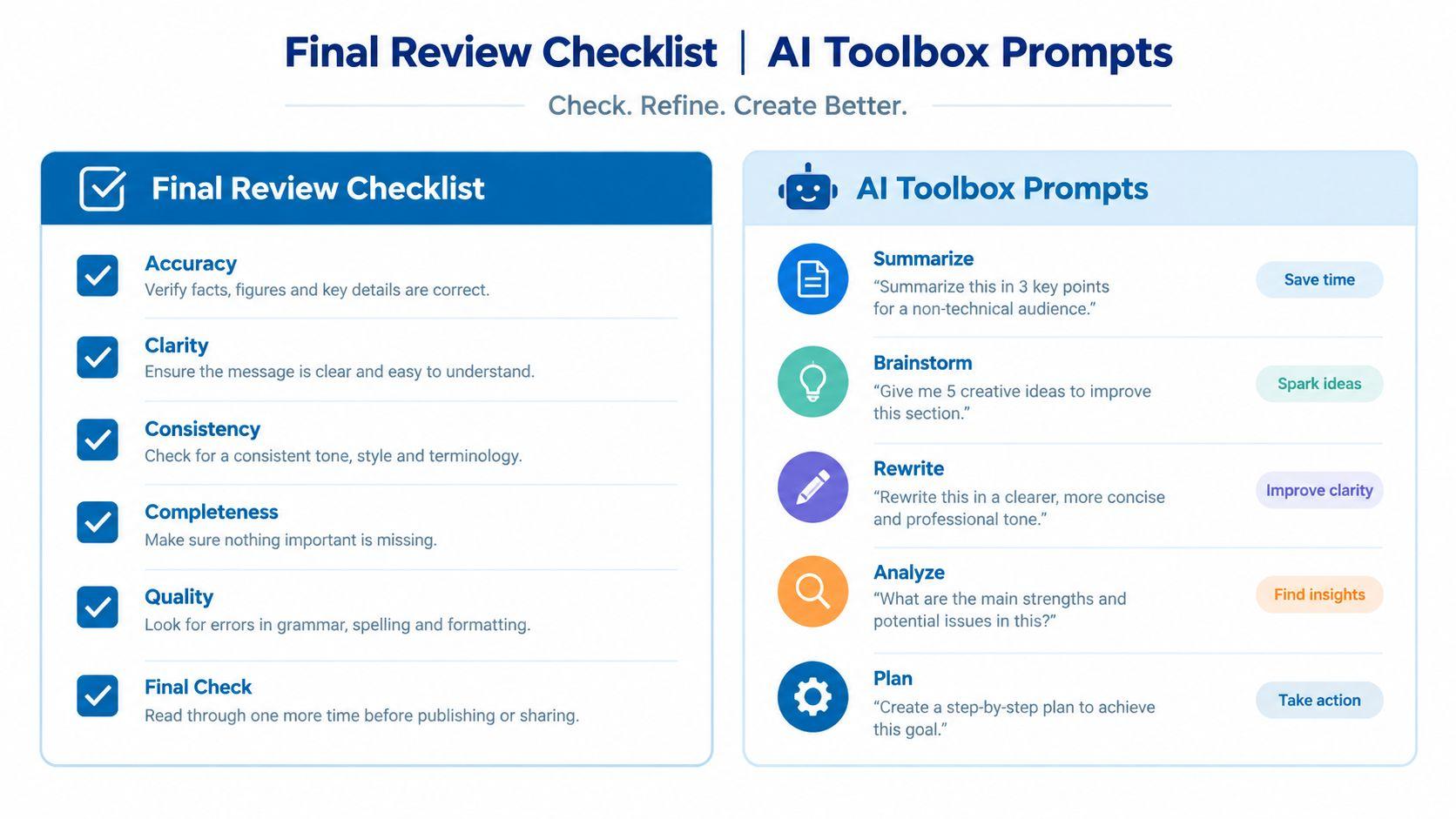
Final Review Checklist and AI Toolbox Prompts
The final review should be fast, strict, and factual. Don’t ask whether the letter sounds impressive. Ask whether a recruiter can understand your fit, eligibility, and working style without guessing.
Run the evidence check
Use this checklist before exporting:
- Role match: The opening names the exact position and employer.
- Requirement match: The body addresses the most important requirements from the posting.
- Proof: Each major claim has a résumé-backed example, deliverable, or result.
- Remote operation: The letter shows asynchronous communication, documentation, ownership, or distributed collaboration.
- Eligibility: Location, time zone, overlap, authorization, sponsorship, and travel details are accurate and relevant.
- Non-duplication: The letter interprets the résumé instead of repeating its chronology.
- Readable format: The file uses a single column, standard headings, and searchable text.
- Clean language: Remove clichés, unsupported enthusiasm, repeated keywords, and awkward AI phrasing.
- Clear close: The final paragraph requests a conversation or identifies a useful next step.
Final test: If a recruiter removed your name and read only the letter, would they know what you can deliver, how you work remotely, and whether you can legally and practically take the role?
Use precise AI Toolbox prompts
Copy the prompts below into an AI drafting workflow, then replace the bracketed details with real information:
Drafting prompt
“Use the attached résumé and this job description to draft a 250 to 400 word cover letter for the [exact role] at [company]. Prioritize the top three requirements. For each requirement, use only evidence found in the résumé. Include one example of asynchronous communication, documentation, self-management, or distributed collaboration. Do not invent metrics, tools, employers, responsibilities, or work authorization details.”
Gap-check prompt
“Compare this cover letter with the job description and list the most important requirements that are missing or weakly supported. Separate missing evidence from missing keywords. Do not add claims. Suggest questions I should answer from my actual experience.”
Eligibility prompt
“Review this letter for remote-work logistics. Check whether it clearly states my location, time zone, required overlap, work authorization, sponsorship need, and travel availability where relevant. Flag anything ambiguous. Do not infer eligibility or rewrite facts.”
Human-edit prompt
“Identify generic phrases, résumé duplication, exaggerated enthusiasm, and sentences that sound interchangeable with another candidate’s letter. Suggest concise alternatives using only the evidence already present.”
Save the final version with a clear filename and verify that the text can be selected and searched. If you’re targeting specialist markets, research channels that fit the role, such as these remote job boards for crypto professionals, then repeat the same location and evidence review for every application.
JobGlance combines job discovery with resume matching, remote and visa-eligibility filters, and an AI Toolbox that drafts cover letters from the specific posting and your resume. Use it to find roles that fit your location, extract the evidence your letter needs, and refine the document before you apply through JobGlance.
Keep reading


