
10 Best Job Sites for Developers in 2026


On this page
The popular advice says to open the biggest board and start applying. That works only if every role is equally reachable, equally fresh, and equally relevant to your stack. For developers, the better question is simpler and sharper, does a site improve fit, eligibility, compensation visibility, startup access, remote geography, or listing quality?
That framing changes the whole search. LinkedIn Jobs and Indeed give you breadth, but breadth without ranking can bury the roles you really want. Specialist boards like Wellfound, We Work Remotely, Remote OK, Built In, Levels.fyi Jobs, Welcome to the Jungle UK, and YC’s Work at a Startup solve narrower problems, from startup discovery to salary context to country-aware remote filtering. JobGlance matters when you want one ranked search across 100+ sources, with dedicated Visa Sponsorship and Work From Anywhere filters that stack with any query. JobGlance
1. JobGlance
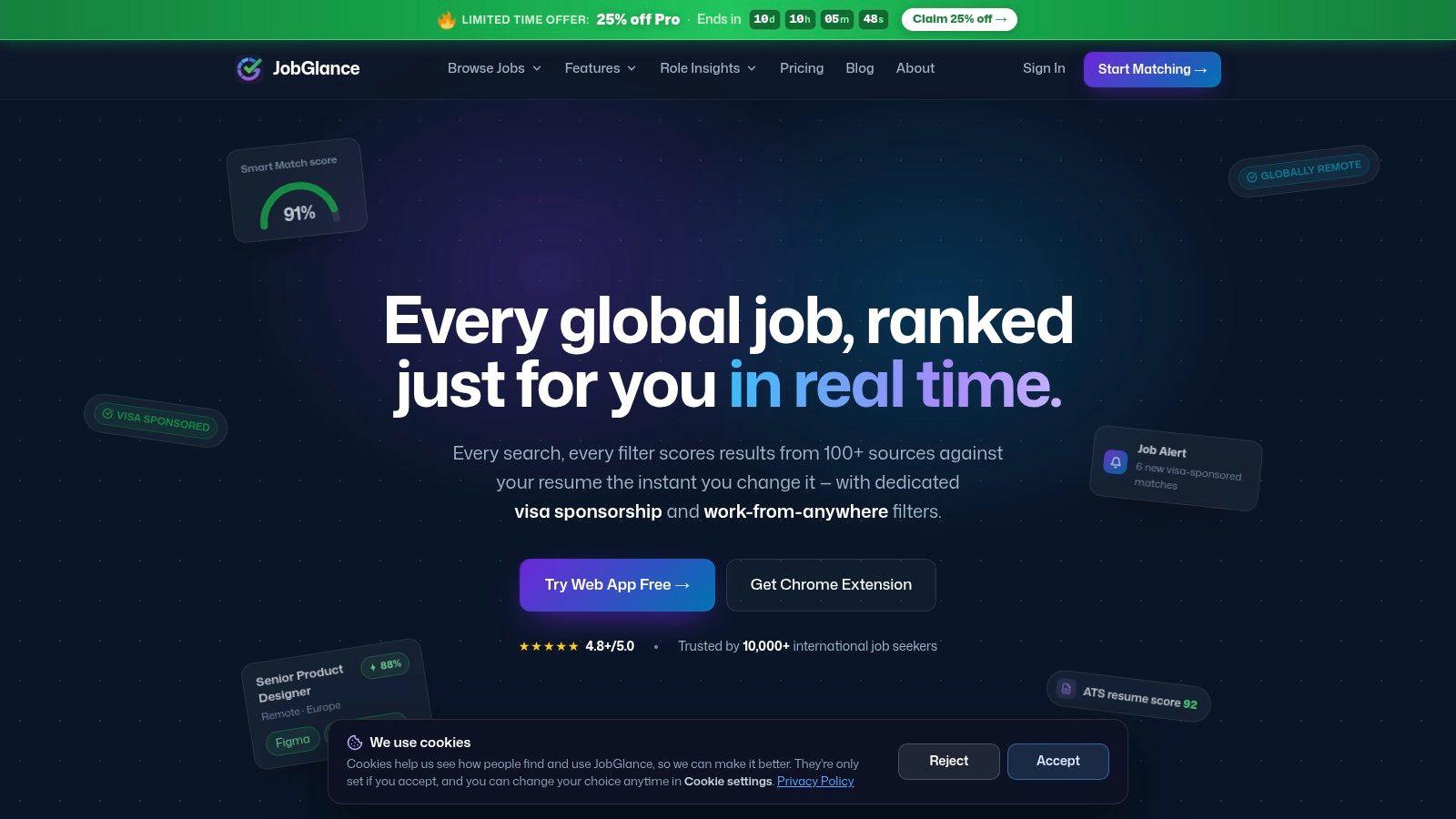
JobGlance is the strongest option when the problem is not finding jobs, but cutting through noise. Its core advantage is Smart Match, which scores every role against your resume and re-ranks results as soon as you change the query or a filter, so a backend engineer doesn’t have to scroll through unrelated frontend, support, or generic “software” openings first. That matters because broad developer searches are crowded, and the deepest inventory only helps if the best-fit roles rise to the top.
Fit ranking and global eligibility in one place
The most useful part of the platform is that fit ranking and eligibility filtering are not separate workflows. The Visa Sponsorship and Work From Anywhere filters stack with any search, which is exactly what international candidates need before they spend time on a posting. JobGlance also keeps sponsorship signals in a curated, cross-checked set of verified sponsors and grades them by confidence, so the platform gives direction without pretending every signal is a legal guarantee.
Practical rule: if you’re searching across countries, filter eligibility first, then rank by fit. That sequence saves far more time than sorting by recency.
The rest of the workflow is built for repeated searching rather than one-off browsing. The web app includes an ATS Resume Builder, Career Gap Analysis, application tracking, and AI-assisted cover letters and company research. The Chrome extension extends the same match score and eligibility detection onto job pages elsewhere on the web, which is useful when a role lives on LinkedIn, Indeed, or a company career site instead of inside the main database.
2. LinkedIn Jobs
LinkedIn Jobs still deserves a place on every developer search because it combines discovery with network effects. The platform’s 2021 survey data, cited by CodinGame, showed 78% of developers named LinkedIn as their go-to place to look for openings, compared with 30% for general job boards and 27% for CodinGame, which explains why recruiter activity remains concentrated there. That concentration is not just about volume, it also affects who sees a posting first and how quickly a role gets flooded.
Best for networked discovery, not blind volume
LinkedIn’s edge is the blend of profile-based recommendations, Easy Apply, saved-search alerts, and recruiter outreach. If your profile is strong and you follow target companies, you can use the platform as both a search engine and a passive pipeline. The tradeoff is obvious, Easy Apply roles can attract heavy competition, so this board rewards candidates who tune their profile, role titles, and keywords carefully rather than spraying applications.
A useful way to think about LinkedIn is that it helps with discovery through people. That makes it especially valuable for developers with a clear specialization, because recruiter search and profile matching often work better when the title, stack, and recent experience line up neatly. It’s less useful if you want a tightly controlled, low-noise ranking experience, because the volume can overwhelm the signal.
3. Indeed
Indeed is the broadest general-purpose source in this list, and its value is simple, it shows you what the market looks like at scale. In January 2026, Indeed showed about 129,000 U.S. software engineer listings and 92,000 software developer listings, which helps explain why it remains a core starting point for developers who want broad coverage. That scale is useful, but only if you’re prepared to filter aggressively and ignore the temptation to treat every search result as equally relevant.
Use the platform when you want to survey the market, not when you want the most elegant shortlist. Indeed’s search and alert workflow works well for people who want one place to store a profile, apply, and track activity, but the high listing volume means duplicate posts and external ATS redirects are common enough that discipline matters.
If you use Indeed for developer jobs, search by stack plus seniority, then remove anything that doesn’t clearly show location, employment type, or team context.
The best use case is still broad coverage across companies and adjacent functions. A developer who’s open to platform engineering, backend, data, or infrastructure roles can use Indeed to map demand across the market quickly, then move shortlisted employers into a more curated tool. For candidates with visa needs, use the dedicated visa sponsorship job search on JobGlance first, then come back to Indeed only for companies that already look legally viable.
4. Wellfound
Wellfound is the startup board for developers who want early-stage energy and more transparency than a generic board usually provides. The platform is strongest when compensation context matters, because salary and equity are often visible up front, which reduces the guesswork that usually comes with startup applications. If you’re evaluating whether to trade process rigor for speed and ambiguity, Wellfound gives you a much clearer starting point than a broad aggregator.
Best for startup-fit searches
The strength here is not just startup volume, it’s the mix of filters and direct access. You can narrow by remote status, company stage, industry, and role, then message founders or recruiters directly. That matters for developers who want to judge product maturity, hiring style, and pace before they invest in interviews.
The limitation is equally clear. If you want enterprise-scale teams, large internal engineering orgs, or a broad mix of established employers, Wellfound won’t be your only source. It’s a specialist tool, and the best results usually come from pairing it with a broader board rather than expecting it to cover the entire developer market.
5. We Work Remotely
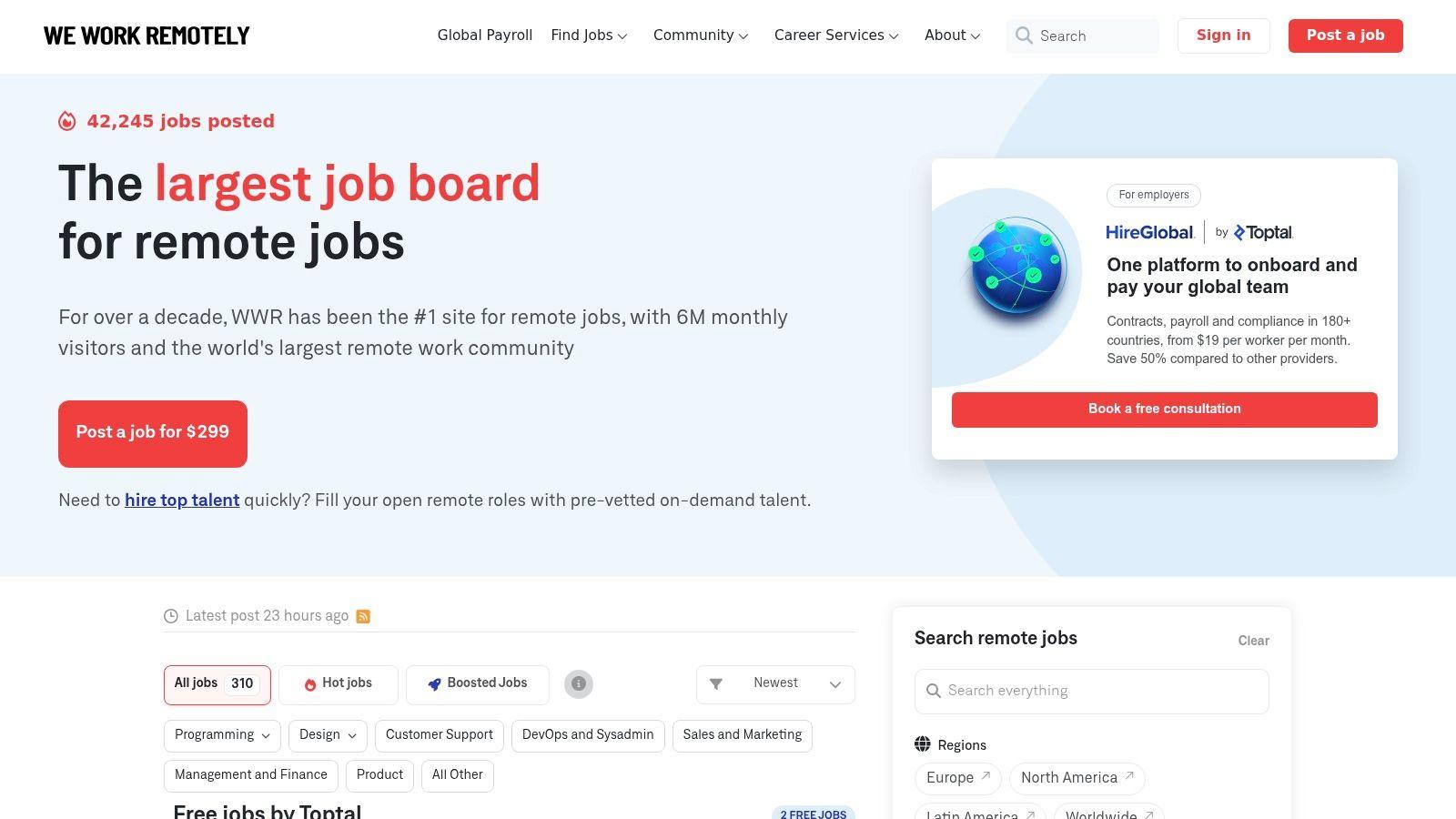
We Work Remotely stays relevant because it does one thing well, it keeps the search focused on remote-first work. For developers who already know they want distributed teams, the board removes a lot of irrelevant local listings and makes browsing feel cleaner than generalist search engines. Its developer categories are familiar, its browsing is straightforward, and its audience is large enough that popular roles still move quickly.
Best for remote-first companies with simple browsing
The useful part is the combination of categories, boosted roles, and hiring-side geo signals. That makes it easier to separate a distributed employer from a role that only looks remote at first glance. For international candidates, that distinction matters because a remote label doesn’t automatically mean you can apply from anywhere.
The board is still worth using when your target is broad remote access rather than country-specific precision. But popular postings can draw a lot of applicants, and the filtering is narrower than newer tools that explicitly sort by time zone, stack, or jurisdiction. If you’re chasing a role abroad, use a specialized filter set alongside it, and cross-check the company’s country policy before you apply. A practical companion read is this guide to working remotely abroad.
6. Remote OK
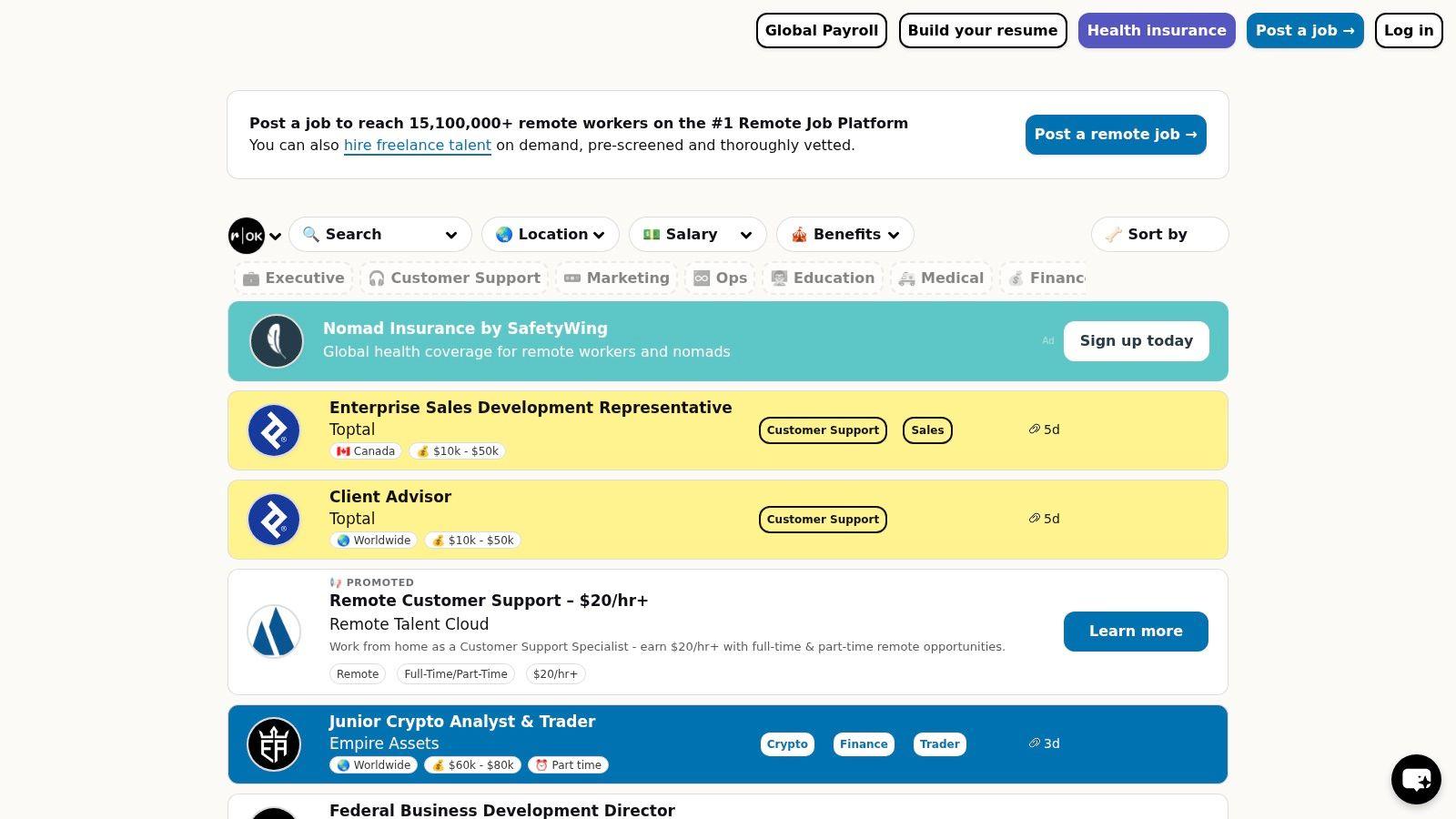
Remote OK is the better remote board when you care about practical sorting, not just a stream of postings. Its filters for salary, time zone, and tech stack make it more useful than a generic remote tag, especially for developers in distributed teams who need to align work hours and compensation expectations before applying. The board’s tag pages also make it easier to focus on specific searches like remote dev roles without starting from scratch every time.
Best for stack, time zone, and pay triage
This is the site to use when you already know the kind of remote role you want and you want to trim the field quickly. It’s especially handy for globally distributed candidates because the search experience is built around the same practical questions developers ask first, not around company storytelling. The tradeoff is that the interface is utilitarian and the posting mix can vary, so freshness checks still matter.
The clearest way to use it is as a triage layer. Start with your stack, add time zone or salary requirements, then compare what remains to higher-signal sources. If you want a more guided layer for the same kind of search, the remote jobs filter on JobGlance is built for that exact problem.
7. Built In
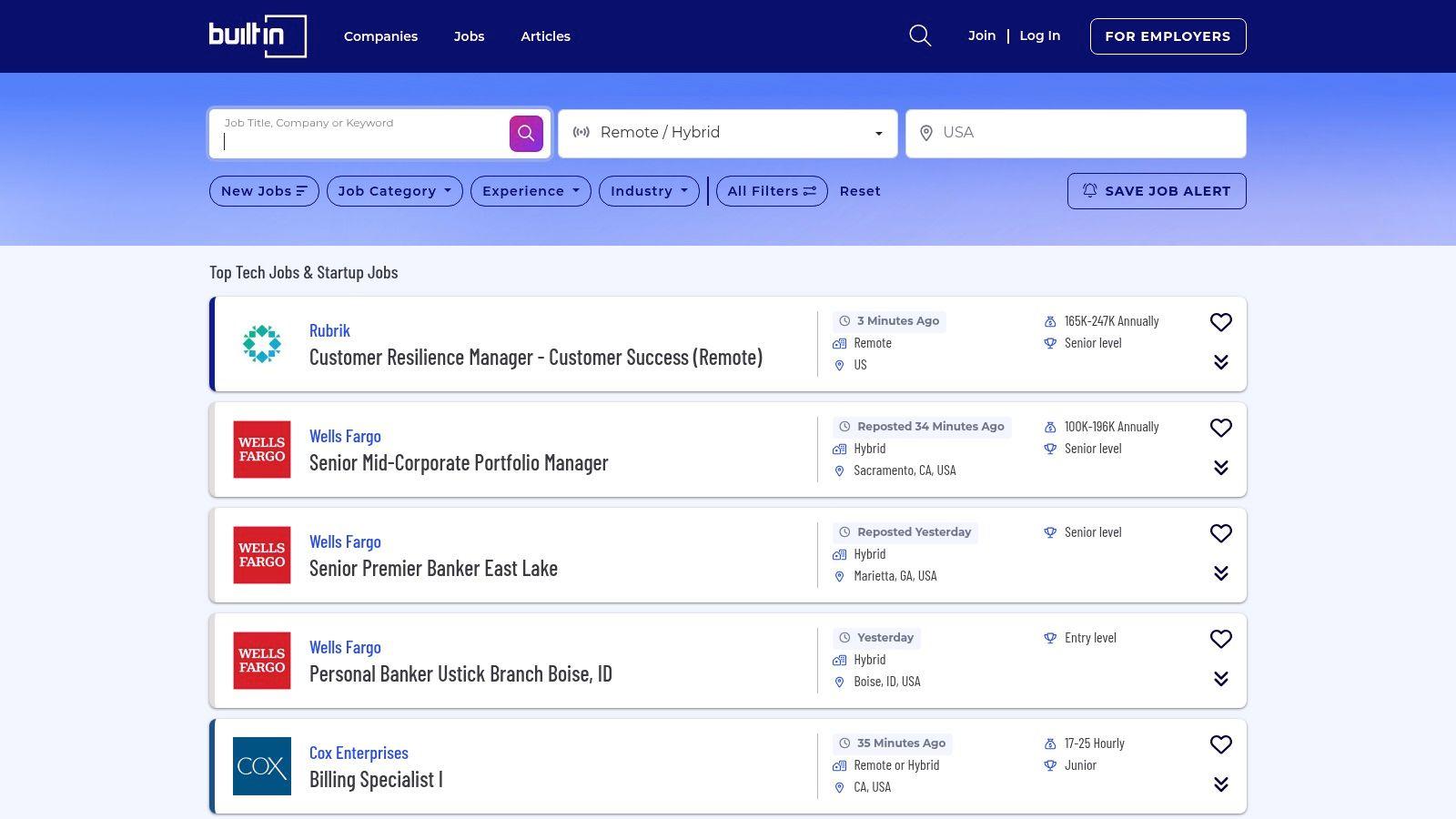
Built In works well for developers who want tech-only listings with more context than a bare job board usually gives them. The platform combines engineering, product, data, and design roles with company profiles and salary guides, so you can understand the employer before you decide whether the posting deserves a full application. That editorial layer matters when you’re comparing startup culture, mid-market teams, and regional tech employers.
Best for tech hubs and employer context
The biggest advantage is noise reduction. General job boards mix developer roles with unrelated functions, while Built In stays inside the tech lane and adds city-level or remote filtering. That makes it useful for candidates who care about the engineering environment as much as the role title.
Its limits are familiar. Coverage varies by region, and the board tilts toward startups and mid-market employers more than giant enterprise shops. Still, if you want company profiles, salary context, and an application tracker alongside listings, it’s a strong middle ground between generic volume and highly specialized niche boards.
8. Levels.fyi Jobs
Levels.fyi Jobs solves a different problem from most boards, it reduces uncertainty about seniority and pay. Because the platform sits next to compensation and leveling data, it helps developers compare a role’s title with its likely scope instead of relying on vague job descriptions. That’s particularly useful for senior engineers who care about whether a title reflects the actual level of responsibility.
The board also tends to feel cleaner because listings are grouped by company with direct links to applications. That cuts down on duplication and lets candidates compare openings more efficiently, especially if they’re already using Levels.fyi for market research.
Best use case: start here when title inflation is a concern. If a company calls a role “senior” but the comp band and peer data say otherwise, you’ll notice the mismatch faster.
The limitation is coverage depth, which varies by region and employer. The audience can also skew senior-leaning, so candidates earlier in their careers may see fewer roles that feel directly aligned. For backend-specific searches, pair it with a role-focused page like JobGlance’s backend developer listings to compare fit and market context together.
9. Welcome to the Jungle UK
Welcome to the Jungle UK is a better fit when you want curation instead of raw volume. Its preference quiz and recommendation feed create a narrower candidate experience, and the company profiles add context on diversity, salary, and reviews. That makes it useful for developers who are tired of generic listings that say little about how the team works.
Best for higher-signal company evaluation
This board is strongest in the UK and EU context, where the curated employer model fits local hiring better than a global catch-all. If you’re weighing culture, transparency, and role quality over sheer volume, the platform does a good job of reducing noise. You still need to sign up to get the full personalized experience, but that’s part of the tradeoff for a better fit layer.
Its weakness is scope. US coverage isn’t as broad as the big aggregators, so it shouldn’t be your only source if you’re applying globally. Use it as a curated filter, not as your entire search strategy.
10. YC’s Work at a Startup
YC’s Work at a Startup is the cleanest route into the startup ecosystem if you want a direct look at companies from the Y Combinator network. It’s especially effective for engineers who prefer founder-led hiring, early-stage growth, and the faster-moving teams that tend to emerge right after a funding event or batch cycle. The board keeps the search tightly focused on current and alumni YC companies, which makes it easier to benchmark startup intensity quickly.
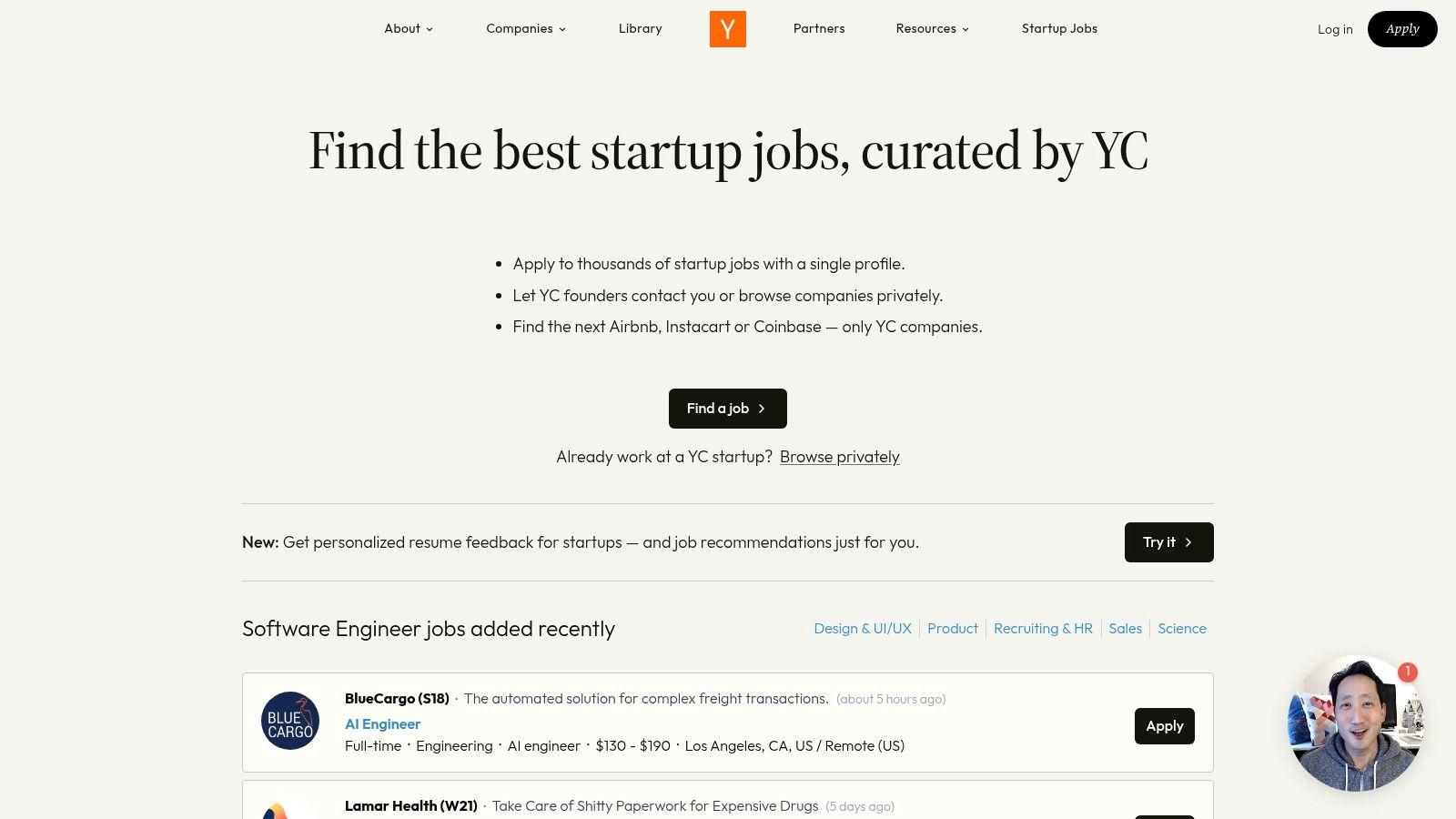
Best for founder access and startup density
The strongest signal here is density. When you want a concentrated startup set rather than a broad market sweep, YC’s job platform gives you a high-signal slice of companies that are already validated enough to matter to serious candidates. Many listings are remote or visa-friendly depending on the company, which helps international developers find employers that are already used to distributed hiring.
The limitation is the same one that defines the upside, startup variance. Some roles will be excellent fits, others will be high-risk or too early-stage for your preferences. You’ll still want to check team size, hiring speed, and application path before investing too heavily.
Top 10 Developer Job Sites Comparison
| Product | Key features | Quality (★) | Price / Value (💰) | Target (👥) | Unique strength (✨) |
|---|---|---|---|---|---|
| 🏆 JobGlance | Smart Match (0–100), 50k+ aggregated roles, visa & work‑from‑anywhere filters, ATS builder, AI Toolbox, Chrome extension | ★★★★☆ (4.8/5 reported) | 💰 Free extension & free tier; Pro $12.99/mo ($10.39/qtr) | 👥 International & remote job seekers; visa seekers | ✨ Dynamic per-search re-ranking; visa/WFA-first filters; daily refresh & privacy‑first |
| LinkedIn Jobs | Profile-based matching, Easy Apply, recruiter outreach, job alerts | ★★★★☆ | 💰 Free to use; paid job posts/recruiter tools | 👥 Network-driven candidates, professionals across seniority | ✨ Built‑in networking + recruiter access |
| Indeed | Massive aggregator, Apply with Indeed, alerts, resume storage | ★★★☆☆ | 💰 Free to use; paid employer listings | 👥 Broad job hunters across industries | ✨ Wide coverage & simple apply/alert workflow |
| Wellfound (AngelList) | Startup-focused listings, salary/equity visibility, direct messaging | ★★★★☆ | 💰 Free to browse/apply (employer-paid posts) | 👥 Engineers & candidates targeting startups | ✨ Compensation transparency & founder access |
| We Work Remotely | Remote-first job board, developer categories, geo-eligibility notes | ★★★☆☆ | 💰 Free to browse; paid employer boosts | 👥 Remote-first developers & designers | ✨ Longstanding remote audience and role focus |
| Remote OK | Remote-only listings, filters for tech stack, time zone, salary, tags | ★★★☆☆ | 💰 Free browsing; paid job postings | 👥 Distributed dev teams & remote pay-conscious candidates | ✨ Advanced tag/timezone/salary filters |
| Built In | Tech-only jobs, company profiles, salary guides, city hubs | ★★★★☆ | 💰 Free to use; employer-paid listings | 👥 Tech professionals in US tech hubs | ✨ Editorial company context + location hubbing |
| Levels.fyi Jobs | Jobs with leveling & compensation context, direct links | ★★★☆☆ | 💰 Free to use; data-driven paid features | 👥 Mid-senior engineers benchmarking comp/level | ✨ Integrated salary & leveling transparency |
| Welcome to the Jungle UK | Curated feed, preference quiz, company insights (diversity, salary) | ★★★★☆ | 💰 Free to use; employer listings paid | 👥 Candidates wanting curated matches (UK/EU focus) | ✨ Preference quiz + rich company profiles |
| YC Work at a Startup | Centralized YC startup listings, profile discovery, remote/visa-friendly startups | ★★★★☆ | 💰 Free to use | 👥 Engineers seeking YC/early-stage startup roles | ✨ High-density YC startup ecosystem and founder-led hiring |
Build a Search Stack, Not a Single Favorite
The right way to use the best job sites for developers is to combine them by function. Start with one broad source for coverage, add one specialist source for your stack or company type, then bring in a remote or international tool when geography matters. That approach matches the market reality: large boards still carry the deepest inventories, but specialized boards decide whether you’re wasting time on roles you can’t take.
A practical stack looks like this. Use LinkedIn Jobs or Indeed for market breadth, then layer in Wellfound or YC’s Work at a Startup if you want startups, or Built In and Levels.fyi Jobs if you want more employer context and compensation visibility. If you’re remote-first, add We Work Remotely, Remote OK, or JobGlance. If you need visa-aware filtering, start with JobGlance’s visa sponsorship filter, because role eligibility is the first gate, not an afterthought.
Search by stack plus seniority, then by stack plus work from anywhere, then by role plus visa sponsorship. That sequence gives you a shortlist that’s actually usable. Before applying, verify the role’s location rules, freshness, compensation clues, and application path, because a strong title means nothing if the posting is stale or the employer sends you into a dead-end ATS.
The clearest takeaway is this, broad boards expose the market, specialist boards improve decision quality, and ranking layers save time. JobGlance is especially useful as the middle layer between discovery and action, because it aggregates 50,000+ roles from 100+ sources, ranks them against your resume, and keeps visa and remote filters separate from ordinary keyword search. Its sponsorship signals are guidance, not a legal guarantee, but for developers trying to avoid wasted applications, that’s still a serious advantage.
If you want one search layer that ranks developer roles by fit instead of recency, JobGlance is built for that job. It pulls together broad coverage, visa-aware filtering, and work-from-anywhere discovery so you can spend less time triaging and more time applying to roles you can take. Visit JobGlance and use it to build a tighter developer search stack today.
Keep reading


