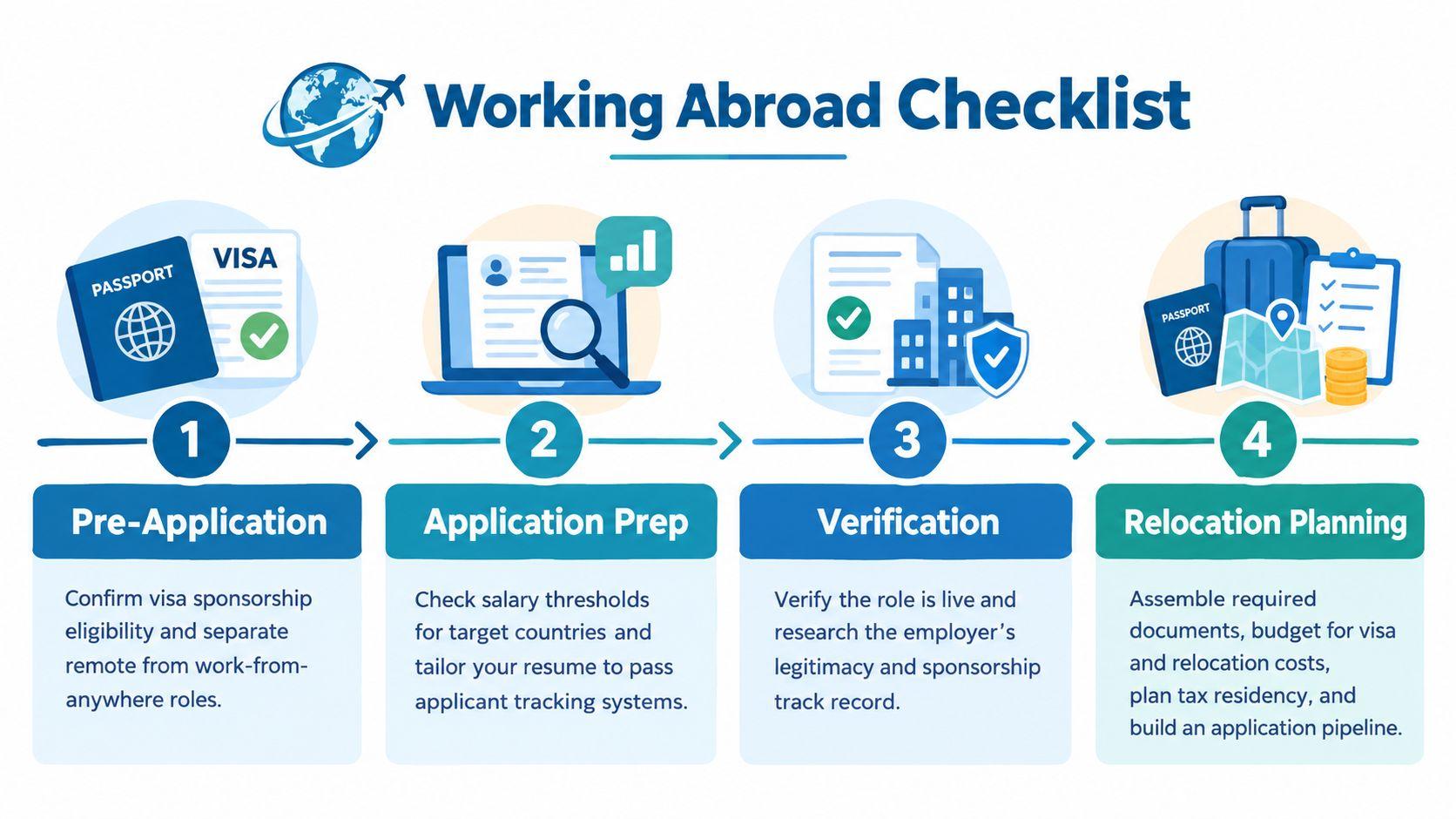
Working Abroad Checklist: 10 Phase-Based Steps for 2026


On this page
Eligibility Decides Your Search Before Your Resume Does. JobGlance’s live database shows how quickly international job search breaks down when eligibility is ignored, only 4.1% of 57,277 live posts checked on 14 August 2026 stated that sponsorship was available, and 61.5% never mentioned it at all. That gap is why a working abroad checklist has to start with permission, then move through applications, paperwork, money, tax, and follow-up. Each step below protects a real decision, so you can stop guessing and know what to verify next.
For quick context on travel rules and country access before you move, it’s also worth checking practical resources like check pet travel destinations if you’re relocating with animals.
1. Confirm visa sponsorship eligibility before you apply
Start with the simplest question, can the employer legally sponsor you? If the answer is unclear, you’re not ready to apply yet. Sponsorship rules differ by country, and many postings never say anything useful until you’re already deep in the process.
A recruiter can like your background and still be unable to hire you. That’s why I treat sponsor status as a hard gate, not a nice-to-have filter. JobGlance’s visa sponsorship category pages help narrow live openings by destination, and the platform distinguishes roles where sponsorship is stated from roles where the employer has a record of sponsoring. Browse the live country pages on visa sponsorship jobs and save yourself from sending applications into a wall.
Practical rule: Don’t spend time on a full application until someone confirms the sponsor route exists for your role and location.
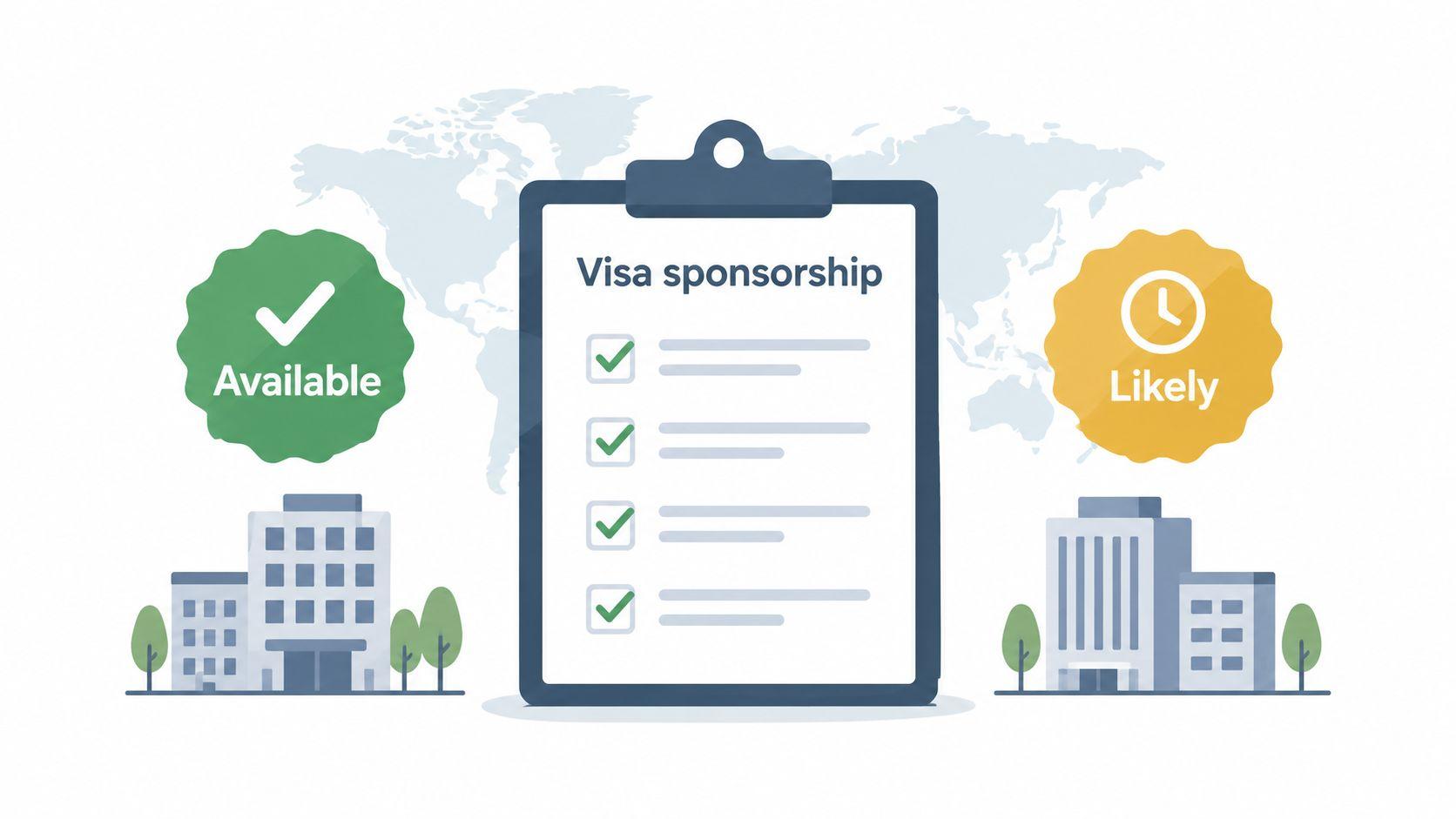
A good recruiter question is direct. Ask whether the company holds a sponsor licence in the UK, or whether it has sponsored work visas in the past 12 months if you’re looking elsewhere. If the posting only looks promising because it’s “Likely,” treat that as a signal to verify, not a promise. Check the employer’s public register entry where one exists, and look for recent visa-holder hires on LinkedIn before you commit.
2. Separate remote from work-from-anywhere eligibility
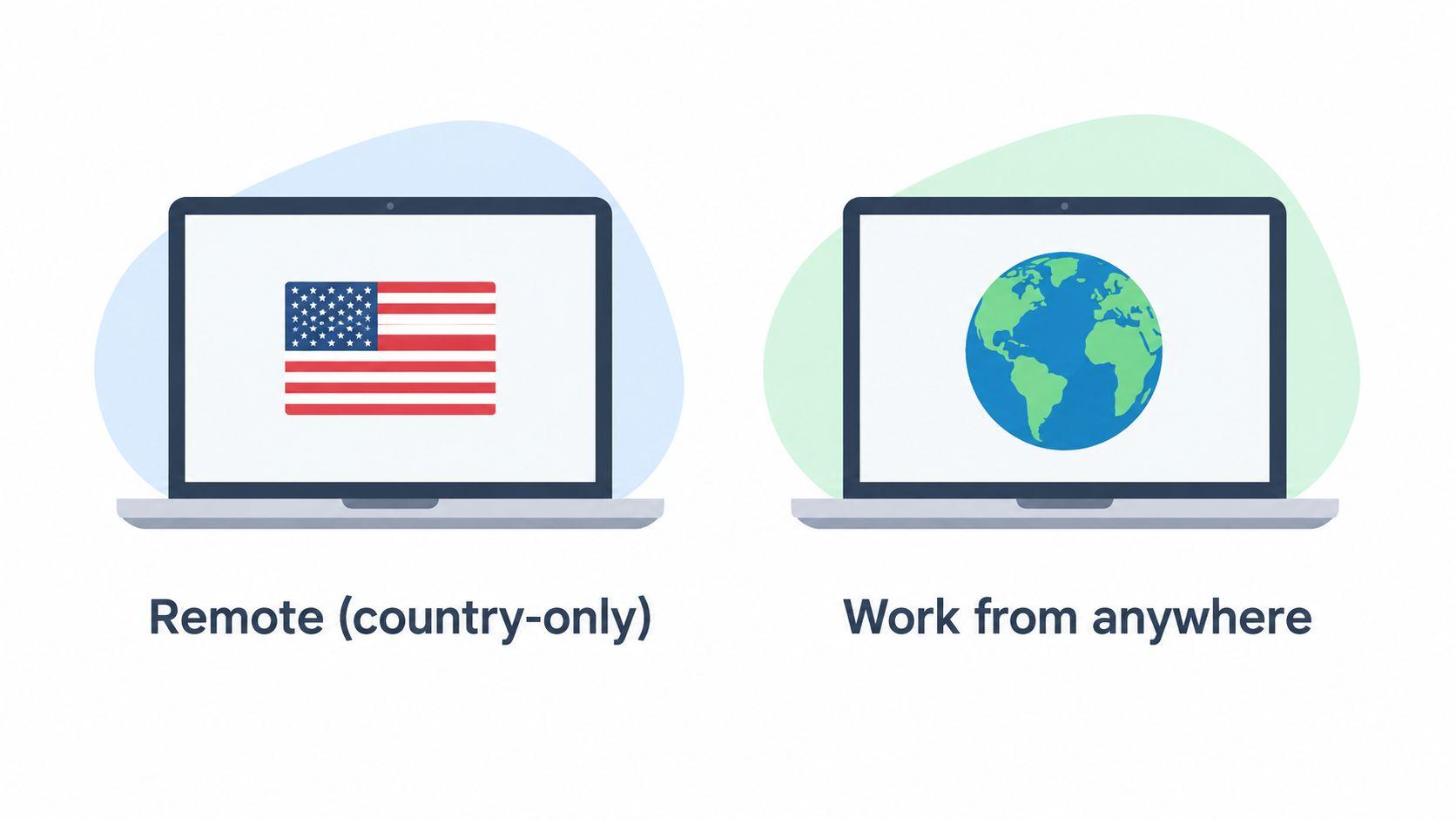
“Remote” is not the same as “open to you from anywhere.” That sounds obvious until you see how many candidates apply to roles that are remote only inside one country. A person in Brazil can be fully qualified and still be ruled out because the employer can only pay through a US entity or US payroll.
The cleanest check is the country restriction. If the posting names specific countries, treat that as the actual boundary. If it mentions contractor status, an employer of record, or direct hire, read that as an employment structure clue, not a perk. JobGlance keeps remote-by-origin pages separate for exactly this reason, including remote jobs worldwide, so candidates outside the hiring country can skip roles they were never eligible for.
The practical trade-off is simple. A role can be fully remote and still be impossible for your situation because employment law, payroll, or tax rules get in the way. If a job says only “remote,” ask the recruiter which countries they can pay in before you apply. That one email is cheaper than a rejection after three interview rounds.
3. Check the salary threshold and visa route for your target country
A role can be a strong fit and still fail on salary. Many visa routes require a minimum pay level, a qualifying occupation, or both, so the employer’s willingness to sponsor doesn’t matter if the offer falls short. In practice, a lot of candidates lose time this way, because they only check the route after they’ve fallen in love with the company.
Verify the route before you short list
Keep the current threshold in your notes for each target country. The UK Skilled Worker general salary threshold was raised to £41,700 in April 2025, with lower rates for some occupations and new entrants, so that number needs a fresh check on the official government site before you rely on it. Singapore’s Employment Pass minimum salary was raised to S$5,600 per month for new applications in 2025, again something to verify directly with the labour authority before applying. Those numbers are useful only if they’re current when you apply.
Use the salary filter before you start comparing companies. If the role sits just below the threshold, ask whether the employer can adjust the package or whether the job qualifies under a different route. I’ve seen candidates reject themselves too early. I’ve also seen employers move compensation when they really wanted the person.
Browse visa sponsorship jobs in Europe if you want a live view of roles where route and location are already part of the search.
4. Tailor your resume to pass applicant tracking systems
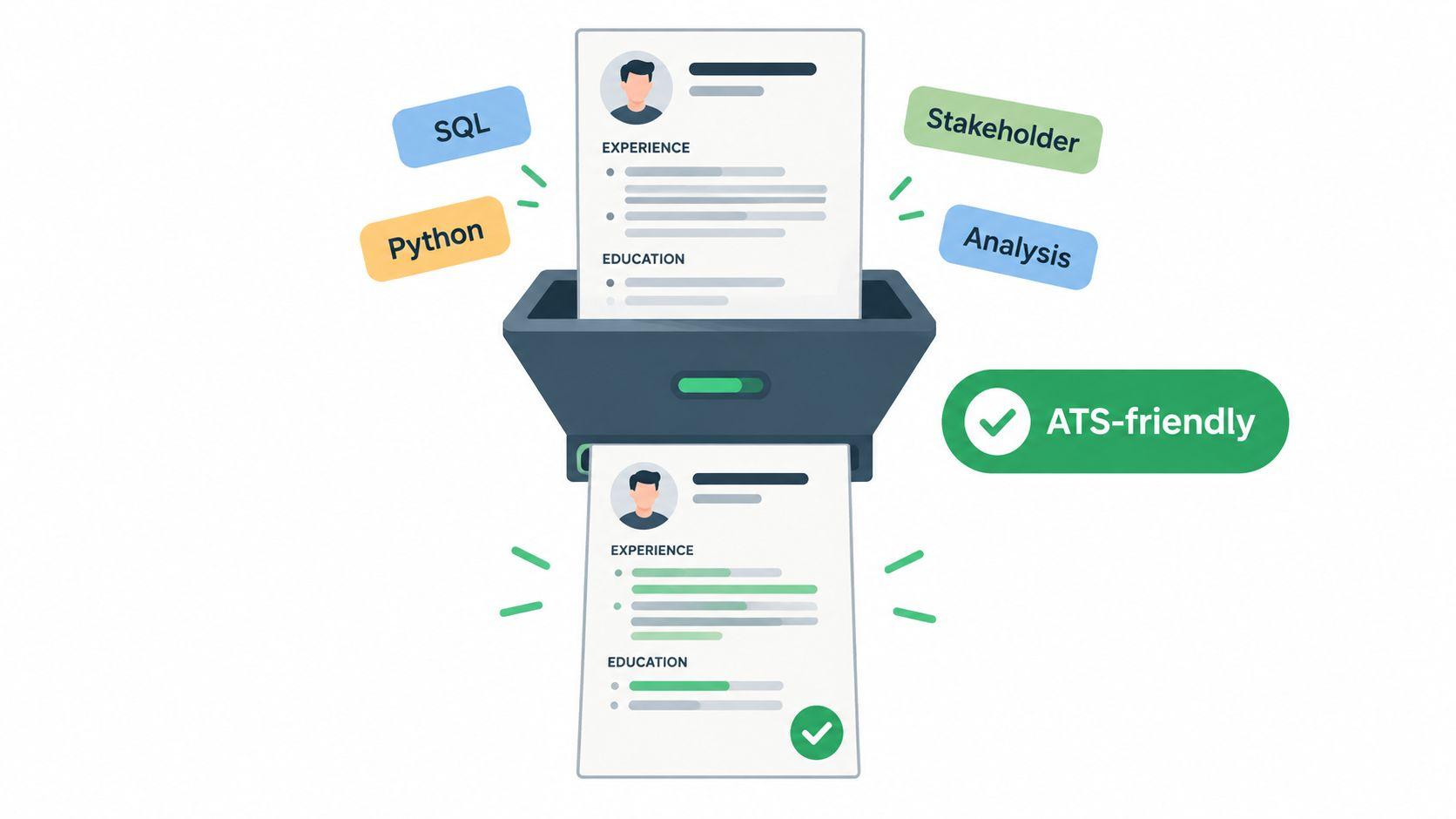
Most large employers screen resumes before a recruiter ever reads them. That means formatting can hurt you before your experience gets a fair hearing. Multi-column layouts, graphics, and missing keywords still get people filtered out in international hiring, especially when the recruiter is scanning for a clear match across borders.
A strong resume for overseas roles should be easy to parse and easy to verify. Keep the title phrasing close to the job posting when it accurately matches your work. Keep dates consistent. Put your location and work authorization in plain text so no one has to guess. A recruiter in another country wants fast clarity, not a design portfolio.
JobGlance’s ATS Resume Builder scores a resume against five concrete ATS checks and rebuilds it in a single-column format. The Resume Match Score also highlights matched and missing keywords inside the job description itself, which is useful when you need to decide whether to add a skill or leave it off because you can’t defend it. A candidate applying for a data role in Germany, for example, can see whether “stakeholder reporting” or “SQL” is missing before the first call.
Put your authorization status where a recruiter can see it immediately. Hiding it doesn’t improve your odds, it only delays the decision.
5. Verify the role is live before you spend time on it
Ghost jobs are expensive. You can lose an evening on a cover letter, a morning on research, and a weekend on interview prep for a role that was already filled. That’s why the first live check should be boring and mechanical, not optimistic.
Look for the posting date and the apply button before you write anything custom. If the role is more than 30 days old, confirm it’s still open before you invest serious effort. JobGlance refreshes its database every 24 hours and purges expired roles within 24 hours, which keeps stale listings from lingering in your pipeline. When a Chrome extension user opens a closed listing, the signal hides the role immediately and removes it from the database within a day.
That matters more than it sounds. A candidate who opens a listing and sees a 404 error has probably already missed the window. Better to know that in minute one than after sending a customized application. Save roles to your tracker only after you’ve confirmed they’re live, otherwise your pipeline becomes a graveyard of dead ends.
6. Research the employer’s legitimacy, stability, and sponsorship track record
International applicants are attractive targets for bad employers and outright scams. They know relocation makes people more vulnerable, more rushed, and often less familiar with local hiring norms. So before you accept an interview or send any documents, verify the company exists and check whether its sponsorship history makes sense.
A real employer should not ask you for a visa processing fee before a contract exists. Legitimate employers usually pay visa costs or agree to reimburse them. Check the company register where one exists, then compare it with the sponsor register or the employer’s public hiring history. Use the recruiter’s company email domain too. If the messages come from a personal address while the website shows a different business name, slow down.
JobGlance’s Deep Company Research is useful here because it covers listing legitimacy, company stability, culture, and interview difficulty with confidence levels and cited evidence. That kind of check is practical when you’re deciding whether a move is worth the risk.
Never pay money to secure a job or visa. If someone asks for a fee up front, that’s a warning sign, not a shortcut.
7. Assemble your documents for cross-border applications
Documents take longer than people expect. Some need translation, legalization, or apostille treatment. Others need a credential evaluation because your degree comes from a different education system. If you wait until you get an offer, you can easily miss the start date.
Keep the core pack ready before you move seriously on applications. That usually means a passport with sufficient validity, degree certificates, transcripts, professional licences, police clearance certificates, and reference letters. For some roles, an evaluation service like WES is part of the process, especially when an employer wants proof of educational equivalence in a different country.
Build one folder for every version
Keep digital copies and certified paper copies together in one place. Ask the employer which checklist they use, because sponsoring companies often send their own document list after the offer. That list should be your source of truth, not a generic internet checklist.
A software engineer from India who needs a US-sponsored role may be asked for an education evaluation early in the process. If that document isn’t ready, the whole timeline slips. This is one of those tasks that feels administrative until it blocks your start date.
8. Budget for visa fees, health costs, and relocation
Moving for work is rarely cheap. Visa fees, health surcharges, legal costs, flights, deposits, and temporary housing can stack up before you’ve earned your first paycheque. Some employers cover those items. Others don’t. Don’t assume, ask in writing.
The UK Immigration Health Surcharge was set at £1,035 per year for most applicants from October 2024, and that sits on top of the visa fee. That single line item changes how you budget, negotiate, and decide whether the offer is workable. If you’re comparing offers across countries, write down which costs are employer-paid and which ones fall on you.
Use a short written budget before you accept anything. Ask who covers visa fees, legal fees, the Immigration Skills Charge if it applies, flights, and relocation. Keep at least three months of living costs in reserve for the period before your first salary. If you need to move money across borders in one transfer, compare providers first because bank spreads can bite harder than people expect.
For teams that handle move costs, the relocation use cases page is a decent reference point for how companies think about the process.
9. Plan tax residency and social security before you move
A move abroad can change your tax residency, create filing duties in two countries during the transition, and leave gaps in social security coverage if you do not map the move properly. That risk rises if you are paid by a foreign employer or working as a contractor.
Track your days in each country from the start. Residency tests often depend on where you are physically present, not just where the employer sits. Check whether your home country and destination have a social security totalisation agreement, and get qualified tax advice in both places before day one. If you are a US citizen working in the UK, you still file US taxes, even if the foreign earned income exclusion or foreign tax credit may reduce double taxation depending on your circumstances.
Health cover needs the same level of checking. If you need to arrange local coverage after arrival, see this guide to switching health insurers in Spain before you register with a new provider.
Don’t rely on the 183-day idea alone
The 183-day threshold is only a guide in some situations. Tax treaties and domestic rules can change the result. Write down travel dates, payroll ownership, and whether the employer offers tax equalisation or relocation tax support. If the company cannot answer those questions, get a real adviser before the move.
10. Build a pipeline to track applications across many companies
International searches get messy fast. You’re dealing with multiple countries, time zones, visa routes, and application systems at once. Without a pipeline, follow-ups slip and the same company can get duplicate applications, which is an easy way to look disorganized.
A simple tracker should record the role, status, sponsorship signal, deadline, time zone, and next action. That makes it possible to filter by route later, instead of digging through old emails. JobGlance’s application tracking syncs across devices in the web app, while the Chrome extension keeps the pipeline in the browser only. Career Gap Analysis also groups recurring skill gaps across saved roles, so you can see what employers keep asking for.
A candidate who saves 40 roles over six weeks will usually notice patterns. If “roadmap prioritisation” or SQL keeps appearing, that’s a signal to sharpen those skills before the next application round. Set a weekly review, close out roles that have expired or gone silent for more than 21 days, and back up your work if you use more than one browser.
Working Abroad: 10-Item Checklist Comparison
| Checklist item | Implementation complexity 🔄 | Resource requirements ⚡ | Expected outcomes ⭐ / 📊 | Ideal use cases 💡 | Key advantages ⭐ |
|---|---|---|---|---|---|
| Confirm visa sponsorship eligibility before you apply | Low 🔄, simple filter and verification step | Low ⚡, basic research; extension optional | High ⭐📊, fewer ineligible applications | International applicants pre-filtering roles | Prevents wasted applications; saves time |
| Separate “remote” from “work from anywhere” eligibility | Low–Medium 🔄, filter configuration and posting checks | Low ⚡, read fine print; extension checks | High ⭐📊, avoids location-restricted rejections | Remote candidates outside employer’s country | Clarifies true remote eligibility; reduces wasted effort |
| Check the salary threshold and visa route for your target country | Medium 🔄, regulatory checks and periodic updates | Medium ⚡, time to verify gov sources | High ⭐📊, realistic shortlists; negotiation leverage | Applicants requiring sponsor-based visas | Filters roles that cannot sponsor; informs salary asks |
| Tailor your resume to pass applicant tracking systems | Low–Medium 🔄, resume edits and template use | Low ⚡, time per application; ATS tools available | High ⭐📊, higher screening pass rate; clearer keyword fit | Applicants targeting large employers with ATS | Improves visibility; highlights matched keywords |
| Verify the role is live before you spend time on it | Low 🔄, quick status check (posting/extension) | Low ⚡, check posting date and apply button | Medium–High ⭐📊, fewer wasted cover letters | All applicants, especially high-volume searches | Prevents applying to closed or ghost listings |
| Research employer legitimacy, stability, and sponsorship track record | Medium–High 🔄, deep company checks and evidence gathering | Medium ⚡, time and sometimes paid services | High ⭐📊, reduces scam risk; better interview prep | International applicants and higher-risk offers | Identifies scams; assesses sponsor reliability |
| Assemble your documents for cross-border applications | Medium 🔄, gather, legalise, translate and apostille | High ⚡, time, fees, translations, certified copies | High ⭐📊, faster onboarding; fewer delays | Candidates expecting offers or multiple applications | Reduces start-date delays; simplifies processing |
| Budget for visa fees, health costs, and relocation | Low–Medium 🔄, create budget and negotiate support | Medium ⚡, cash reserves and planning effort | Medium–High ⭐📊, financial readiness; stronger negotiation | Candidates planning relocation | Avoids cash-flow problems; aids offer negotiation |
| Plan tax residency and social security before you move | High 🔄, complex legal and treaty assessments | High ⚡, professional advice; travel logs | High ⭐📊, avoids tax penalties; protects entitlements | Long-term relocations or cross-border payroll setups | Prevents unexpected liabilities; preserves benefits |
| Build a pipeline to track applications across many companies | Low–Medium 🔄, set up and maintain tracking system | Low ⚡, time to update; tools optional | High ⭐📊, better follow-ups; skill-gap insights | High-volume international job searches | Keeps organized; reveals recurring skill gaps |
Settle In and Keep Your Options Open
The move itself isn’t the finish line. Once you arrive, register your address, open a local bank account, secure housing and healthcare, and keep original and digital copies of every key document in your carry-on and backup folder. That’s the part that protects you if a local admin step gets delayed or a document gets lost.
Keep an emergency fund with a documented plan to return home if the role falls through or the visa doesn’t hold. That isn’t pessimism. It’s a professional contingency plan. A lot of international hires go sideways not because the job was bad, but because people assumed arrival meant stability. It doesn’t. Stability comes from keeping your paperwork current, your money accessible, and your next step visible.
Review your pipeline before you stop. Then choose the one step that still feels fragile, maybe sponsorship verification, tax planning, or document readiness, and tighten that before your next application cycle. That habit makes the whole working abroad checklist more useful than a one-time prep list, because it stays attached to how you move through the search.
JobGlance can help you keep the search practical. It lets you filter for visa sponsorship and work-from-anywhere roles, score your resume against live jobs, and track applications in one place. If you want a cleaner way to screen eligible roles and keep your pipeline organized, visit JobGlance and use it as the control panel for your next international application round.
Keep reading


